Vietnamese food changes as you travel. Northern cooking tends to be subtle and savoury, central dishes run spicier and more intense, and the south likes sweetness, coconut and great piles of fresh herbs. Almost every dish arrives with something to add at the table: lime, chilli, fish sauce, herbs.
These ten are a starting point, grouped by the region where they are most at home. Most are cheap, most are eaten on the street, and nearly all taste better where they come from.
In the north
Hanoi is a city of breakfast soups and lunchtime grills, and the best cooking often happens at stalls that serve a single dish.
- Pho: rice noodles in a clear, long-simmered broth, most often with beef (pho bo) or chicken (pho ga). Hanoi's version is restrained, with fewer herbs on the side than you'll find in the south. Best eaten early.
- Bun cha: grilled pork patties and pork belly served in a warm, sweet and sour fish sauce dressing, with rice vermicelli and herbs to dip. A Hanoi lunch dish; many stalls sell out by early afternoon.
- Bun rieu: a tomato and crab broth with rice noodles, tofu and soft crab cakes, often served with shrimp paste on the side. Sour, rich and very good on a cool morning.
- Ca phe trung (egg coffee): egg yolk whipped with sugar and condensed milk into a thick cream, spooned over strong coffee. The usual story is that it was created in Hanoi in the 1940s, when fresh milk was scarce.
On the central coast
Hue was the imperial capital, and the food of the centre carries both royal refinement and a lot of chilli.
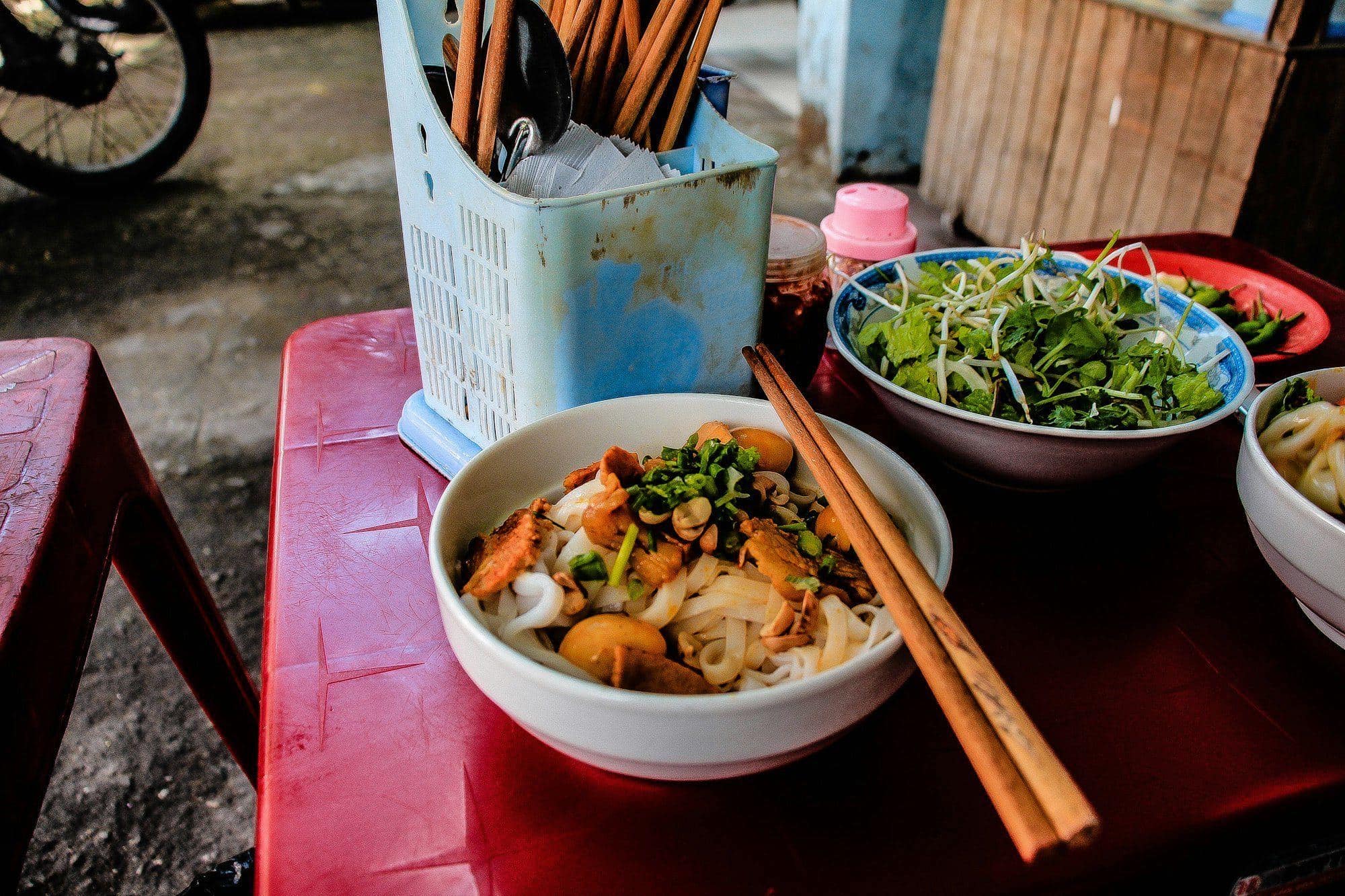
- Cao lau: Hoi An's own noodle dish, with thick, chewy noodles, sliced pork, fresh greens and crunchy crackers in a small amount of rich sauce. It is hard to find a true version outside the town.
- Bun bo Hue: a spicy beef noodle soup built on lemongrass and fermented shrimp paste, with thick round noodles, beef shank and often pork knuckle. Deeper and hotter than pho.
- Banh mi: a light, crackly baguette filled with pate, cold cuts or grilled meat, pickled carrot and daikon, cucumber, coriander and chilli. Sold all over the country, but Hoi An's stalls have a particular reputation.
In the south
In Saigon and the Mekong Delta, meals get sweeter, greener and more hands-on.
- Com tam: broken rice topped with a grilled pork chop, shredded pork skin, a slice of steamed egg and pork cake and a fried egg, with sweet fish sauce poured over. A Saigon staple at any hour.
- Banh xeo: a crisp, turmeric-yellow rice flour crepe named for the sizzle it makes in the pan, filled with pork, shrimp and bean sprouts. Tear off a piece, wrap it in lettuce and herbs, and dip.
- Goi cuon: fresh rice paper rolls of shrimp, pork, vermicelli and herbs, served with a peanut and hoisin dip. Light, cool and ideal in the southern heat.
How to eat well on the street
Street food is where most of the country eats, and it is usually the best food you'll have. A few habits help.
- Choose stalls that are busy with locals and cook to order
- Go at the right time of day: pho in the morning, bun cha at lunch, grills in the evening
- Use the herbs, lime and chilli on the table; dishes are meant to be adjusted
- Carry small notes in Vietnamese dong, as most stalls take cash only
- If you have allergies, especially to shellfish or peanuts, get them written down in Vietnamese
After the first ten
Once these feel familiar, keep going. Try cha ca in Hanoi, turmeric fish fried at the table with dill. In Hue, look for banh beo, small steamed rice cakes topped with dried shrimp. Hoi An has white rose dumplings and mi quang, a turmeric noodle dish with only a little broth. In the south, finish with che, the sweet soups of beans, jelly and coconut milk sold from glass cabinets on the street.
If food is the reason you're travelling, we can build a trip around markets, cooking classes and the stalls worth crossing a city for.
Want this built into a trip?
Tell us your dates and interests and we'll plan a journey around them.
定制您的行程Destinations mentioned: Hanoi, Hoi An, Hue, Ho Chi Minh City